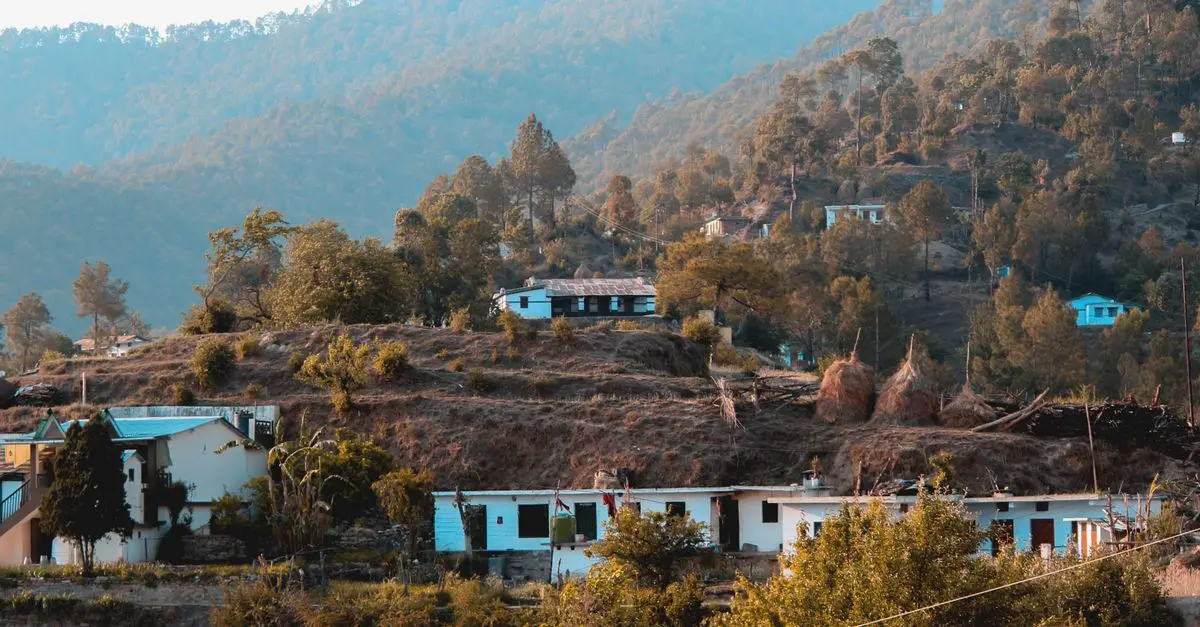
India, in the numbers that decide it
What life costs
high confidence- One-bed flat, city
- €160/mo
- Three-bed home
- €550/mo
- Groceries, one person
- €45/mo
- Utilities
- €35/mo
- What a local salary buys
- 76/100
Ways in
- Lowest income floor of any route
- €240/mo
How long it takes
- Fastest route on paper
- Intern Visa — 30 days
- Routes that publish a wait
- 3 of 17 tracked
Moving with family
- Family & reunification routes
- 1
- Routes through marriage
- 2
- Healthcare system
- mixed
Day-to-day life
high confidence- Healthcare
- 31/100
- Climate
- 65/100
- English in daily life
- Low (EF EPI 59)
- Internet speed
- 66 Mbps
- Overall quality-of-life score
- 122
Tax, in practice
high confidence- Real rate at €90k
- 14.9%
- Take-home per month at €90k
- €5,675
- VAT
- 5%
- How it is structured
- progressive
- Special regimes still open
- New (default) tax regime, Old tax regime, Deductions / investment incentives, Foreign tax relief
India offers 9 distinct visa pathways for skilled workers and migrants in 2026. Located in Southern Asia, processing times range from 1–3 months. The country scores a quality of life index of 6.7/10 and a safety score of 5.8/10. Monthly living costs for a single person range from €750–€1,100 depending on the city. The primary language is Hindi. Permanent residency is achievable in as few as 3 years. Top-scoring professions for immigration include AI/ML Engineer (7.8/10), Cybersecurity Specialist (7.6/10), Cloud Engineer (7.5/10). Overall migration friendliness is rated 6.1/10. Figures as of H2 2026 (official sources, last re-check).
Visa Programs
| Program | Min Income | Min Savings | Language | Processing | Path to PR | Citizenship |
|---|---|---|---|---|---|---|
| Employment Visa | €1,234/mo | — | — | — | — | — |
| Entry (X) Visa | — | — | — | — | — | — |
| Film Visa | — | — | — | — | — | — |
| Intern Visa | €592/mo | — | — | 4 weeks | — | — |
| Journalist Visa | — | — | — | 9 weeks | — | — |
| Missionary Visa | — | — | — | — | — | — |
| Overseas Citizenship of India (OCI) | — | — | — | 4 weeks | 1 year | 5 years |
| Project Visa | — | — | — | — | — | — |
| Research Visa | — | — | — | — | — | — |
| Student Visa | — | — | — | — | — | — |
Financial Requirements
€1,234/mo minimum income
€592/mo minimum income
Reality Check
Would you actually qualify?
The reality check above is the general picture. Get your own honest verdict — which visas you qualify for, and your real blockers — in a free 3-minute assessment.
Get Your Free Verdict →Common Mistakes to Avoid
- Underestimating FRRO registration requirements — failure to register within 14 days of arrival can result in fines, visa complications, and deportation risk. Make it your first priority.
- Not obtaining a PAN card early — this tax identification number is required for bank accounts, large purchases, investment, and tax compliance. Apply immediately upon arrival.
- Ignoring air quality in Delhi — winter air pollution (October-February) is genuinely dangerous for health. If living in Delhi, invest in air purifiers and limit outdoor activities during high-AQI days.
- Expecting a path to permanent residency — unlike most countries, India does not offer PR through employment or investment (except OCI for eligible individuals). Plan accordingly.
- Not hiring a chartered accountant — India's tax system is complex with multiple filing requirements, TDS (tax deducted at source) reconciliation, and advance tax payments. A CA is essential, not optional.
- Treating all of India as one entity — India is a continent-sized country with enormous variation. Bangalore, Mumbai, Delhi, and Kerala are completely different in culture, climate, language, and quality of life. Research specific cities.
Insider Tips
- Bangalore is India's best city for foreign professionals — IT hub, moderate climate (year-round 18-32C at 900m elevation), cosmopolitan culture, best English proficiency in India, and growing international food/entertainment scene.
- UPI (Unified Payments Interface) is India's killer app — nearly everything can be paid digitally through Google Pay, PhonePe, or Paytm. Cash is increasingly unnecessary in cities. Set up UPI as soon as you have an Indian bank account.
- Domestic help transforms quality of life in India — a cook (€50-80/mo), cleaner (€30-50/mo), and driver (€150-250/mo) are standard even for middle-class households. This level of household support is one of India's unique advantages.
- India's train network (IRCTC) is one of the world's largest and best ways to see the country — book tickets online at irctc.co.in. Tatkal booking for last-minute travel. Premium trains (Rajdhani, Shatabdi, Vande Bharat) offer good comfort.
- The Startup India scheme provides significant benefits: 3-year income tax holiday, simplified compliance, and access to government contracts. If your business qualifies, register through DPIIT — it's worth the paperwork.
- Goa and Kerala offer a completely different lifestyle from major cities — slower pace, beach/nature focus, established expat communities, and lower costs. Consider these for a hybrid approach: base in Goa/Kerala with periodic trips to business cities.
Who Qualifies?
Best visa: Employment Visa with employer sponsorship; OCI if eligible
India's IT sector is the world's largest outsourcing market. Bangalore, Hyderabad, Pune, and Gurgaon are major tech hubs. Foreign tech workers are employed by multinationals (Google, Microsoft, Amazon, Apple all have major India offices) and Indian IT giants (TCS, Infosys, Wipro, HCL). Salaries for foreign employees are competitive: EUR 30,000-80,000/year. India exports more tech talent than it imports, so foreign tech workers fill specialized/leadership roles. The Employment Visa minimum of USD 25,000/year is easily met.
Best visa: Employment Visa with hospital/institution sponsorship
India has a large domestic healthcare workforce and does not generally recruit foreign healthcare workers. Exceptions: international hospitals and research institutions may sponsor foreign specialists. Medical credentials require validation through the Medical Council of India — a complex process. India exports healthcare workers (doctors and nurses) rather than importing them. Research collaborations at AIIMS, CMC Vellore, or Tata Memorial Hospital may provide opportunities for specialized researchers.
Best visa: Employment Visa with employer sponsorship (rare)
India has an abundant workforce for skilled trades at very low wages. Foreign skilled trade workers are not in demand. The Employment Visa minimum salary of USD 25,000 effectively prevents hiring foreign workers for standard trades roles. Exceptions exist only in highly specialized industrial roles at multinational manufacturers.
Best visa: No suitable visa — Tourist/Business Visa used informally; OCI if eligible
India lacks a Digital Nomad Visa. Remote workers use tourist visas (limited to 6 months, no work permission) or Business Visas (grey area). India's extreme affordability makes it attractive for remote workers — a comfortable lifestyle on €800-1,200/mo in Bangalore or Goa. Coworking spaces are growing rapidly. Internet is increasingly reliable in major cities (18.7 Mbps average, faster in tech hubs). The main challenges: visa limitations, FRRO registration requirements, and the lack of a clear legal framework for remote work.
Best visa: OCI Card (if eligible through Indian origin or marriage); otherwise no suitable visa
India does not have a formal retirement visa. Non-OCI foreigners face the same visa limitations as other categories. For OCI-eligible retirees, India is extremely attractive: ultra-low costs, excellent private healthcare, domestic help, and rich cultural experiences. Popular retirement locations include Goa (beach), Kerala (backwaters/Ayurveda), and Pondicherry (French-influenced). For non-Indian-origin retirees, India is better as a medium-term stay destination using tourist visa rotations.
Best visa: Business Visa or Investor Visa; OCI if eligible
India's USD 3.5 trillion economy offers vast investment opportunities. Make in India and Startup India initiatives encourage FDI. Popular sectors: IT services, manufacturing, renewable energy, real estate (commercial), and education. FDI restrictions exist in certain sectors. The bureaucracy for business setup is significant — Registrar of Companies, GST registration, FEMA compliance, and multiple regulatory approvals. India rewards patient, well-advised investors but punishes those who underestimate the complexity.
Cost of Living
Monthly figures in EUR. Net reflects Indian income tax (new regime: progressive 0-30% + 4% cess) and mandatory contributions (PF 12%, ESI where applicable). Salaries reflect major city averages (Delhi NCR, Mumbai, Bangalore). Foreign employee packages at multinationals are typically higher than local rates.
Downloadable Data
Official sources
India
- Employment Visa — cgisf.gov.in — last re-checked 2026-06-24
- Intern Visa — mha.gov.in — last re-checked 2026-06-24
- Permanent Residency Status (PRS) — mha.gov.in — last re-checked 2026-06-10
Figures are compiled from official government sources and re-checked on a rolling basis. Always confirm on the official page before applying.
Frequently Asked Questions
What is the OCI (Overseas Citizen of India) Card?
The OCI Card is India's quasi-permanent residency document for people of Indian origin and their spouses. It provides lifelong multiple-entry visa, exemption from FRRO registration, and work rights without a separate Work Permit. Available to former Indian citizens (up to 4 generations) and spouses of Indian citizens/OCI holders (after 2 years of marriage). Cannot vote or hold public office. Processing takes 4-8 weeks.
How does India's Employment Visa work?
India's Employment Visa requires a job offer from an Indian company with a minimum annual salary of USD 25,000. The position must require skills not readily available locally. Valid for 1-5 years. FRRO registration mandatory within 14 days of arrival. PAN card needed for tax purposes. Does not lead to permanent residency. Processing takes 2-6 weeks.
Is there a Digital Nomad Visa for India?
No. India does not have a Digital Nomad Visa as of 2026. Remote workers use tourist visas (e-Visa for 30-90 days) or Business Visas. Working remotely on a tourist visa is technically not permitted. Business Visas cover consulting and business activities but not employment. This is a significant gap in India's immigration framework.
How complex is India's bureaucracy for foreigners?
Very complex. FRRO registration within 14 days is mandatory. Multiple agencies (MHA, MEA, FRRO, local police) overlap. PAN card, bank accounts, and SIM cards all require extensive documentation. Digitization through India Stack has improved some processes. Hiring a local immigration consultant (EUR 500-2,000) is strongly recommended.
How affordable is India for expats?
India is one of the most affordable countries in the world (cost of living index: 35.5). A single person can live comfortably on €800-1,500/mo in major cities. Domestic help is affordable (cook €50-80/mo, cleaner €30-50/mo). Street food EUR 1-3. Imported goods and premium apartments are more expensive. Purchasing power index of 78.5 is very high.
How does the healthcare system work for foreigners in India?
Dual system: affordable public hospitals (crowded, variable quality) and excellent private hospitals (Apollo, Fortis, Max). India is a medical tourism hub — procedures cost 60-90% less than US prices. Private insurance costs €25-80/mo. English-speaking doctors available at major hospitals. Private healthcare in Delhi, Mumbai, and Bangalore is world-class.
Can foreigners get permanent residency or citizenship in India?
Permanent residency may be available depending on the visa stream; specific timelines are not published for the pathways currently tracked.
What are India's tax rates for foreign workers?
Progressive rates under the new regime: 0% to 30% plus 4% cess. Top rate (30%) applies above approximately EUR 16,500/year. Tax residency triggered at 182+ days in India per financial year (April-March). Non-residents taxed only on Indian-source income. India has double taxation agreements with 90+ countries. Returns due July 31.
Find out if you qualify for India
Our free assessment matches your profile against India's 5 visa programs in under 3 minutes.
Get Your Free Verdict