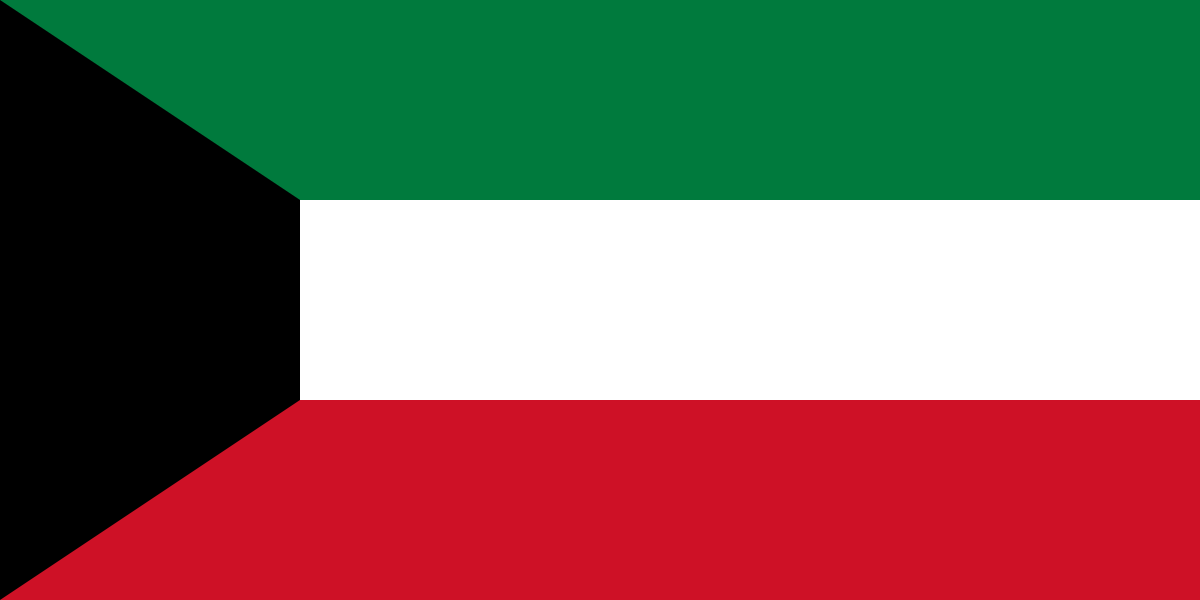
 Healthcare
Healthcare System Overview
| Indicator | Value |
|---|---|
| System Type | Mixed |
| Healthcare Quality Index | 78/100 |
| Spending per Capita | €1,829 |
| Life Expectancy | 80.6 years |
How the System Works
Kuwait's healthcare system is classified as Mixed system. The system combines public and private healthcare elements.
Public vs Private Healthcare
Most countries offer both public and private healthcare options:
- Public healthcare: Available to all registered residents. May have waiting lists for non-urgent procedures. Typically lower cost but less choice of provider.
- Private healthcare: Shorter wait times, choice of specialist. Higher cost but often better facilities. Many expats choose private insurance for the first year.
Considering Kuwait? Our free check runs your answers against real visa rules and shows the source behind every requirement. Explore Your Pathways →
Emergency Numbers
| Service | Number |
|---|---|
| Universal Emergency | 777 |
| Ambulance | 777 |
| Police | N/A |
Save these numbers in your phone before arriving in Kuwait. In EU countries, 112 works universally. In non-EU countries, learn the local numbers and keep them accessible.
Health Insurance for Expats
As an expat in Kuwait, your insurance options typically include:
- Employer-sponsored insurance: If employed locally, your employer may enrol you in the public system or provide private coverage
- International health insurance: Global plans from providers like Cigna, Allianz, or Bupa — ideal for the first year or if you plan to move again
- Local private insurance: Often cheaper than international plans but may have language barriers in claims
- Public system enrolment: Available once you have a residence permit and employment
Healthcare Quality
With a healthcare quality index of 78/100, Kuwait offers good healthcare by international standards.
Life expectancy in Kuwait is 80.6 years, which is above the global average.
Government healthcare spending is approximately €1829 per capita per year.
Practical Tips
- Register immediately: Sign up for health insurance within your first week of arrival
- Bring medical records: Carry translated copies of your medical history, prescriptions, and vaccination records
- Find an English-speaking doctor: Expat communities and forums often maintain lists of English-speaking practitioners
- Prescription medications: Check if your regular medications are available and legal in Kuwait. Bring a 3-month supply with a doctor's letter
- Dental care: Dental coverage varies widely — check what your insurance covers and consider supplemental dental insurance
Additional Practical Information
The following information is compiled from expat community sources and recent reports to complement the official data above.
Key Institutions and Services
Based on current expat reports, the following organisations and services are relevant for newcomers to Kuwait:
- Expats Health Insurance
- New Mowasat Hospital
- Dar Al Shifa Hospital
- Al Seef Hospital
- The New Mowasat Hospital
- The Dasman Diabetes Institute
- Dasman Diabetes Institute
- Health Government Insurance
Additional Data Points
Recent reports and expat sources provide these additional figures for Kuwait:
- Exclusive discounts and additional benefits on Regency for Expats Health Insurance. Get a free quote now and save up to 40% on the best health insurance for Expats.
- Specialists in international health insurance for 40 years, offering health cover adapted to your needs as an expatriate, whether for a temporary stay or a long-term expatriation.
- Al-Amiri Hospital was established in 1949 and was the first governmental hospital to open its doors in Kuwait. It is estimated that the hospital serves approximately 400,000 patients on a yearly basis. Al-Amiri Hospital offers a wide range of medical services and specialties, including pediatrics and internal medicine.
- Mubarak Al-Kabeer Hospital opened its doors in 1982 to serve the Hawalli Governorate, which consists of approximately 700,000 people. It is also a university hospital where many of the Kuwait University medical students complete their residencies. It is a general hospital that offers a range of services, including a surgery department, a pediatrics department, and a radiology department.
- The center currently treats over 3,000 new cancer patients every year and provides services such as prevention, early detection, treatment, and palliative care. The centers are equipped with state-of-the-art medical equipment.
- Private healthcare facilities also play an important role in the Kuwaiti healthcare system . Most people prefer getting treated at private facilities due to their faster service and added comfort and convenience.
- Some medicines derived from porcine sources cannot be brought into Kuwait, as all porcine products are illegal. Sleeping pills and certain narcotics are also banned in Kuwait. If needed, these could be purchased outside of Kuwait and brought in with a proper prescription.
- Medical exams required for residency visas in Kuwait
- One of the most important things to consider when having a baby in Kuwait is that you will need a valid marriage certificate . Without one, you will not be able to obtain a birth certificate for your child and may experience legal difficulties such as imprisonment or deportation.
Additional data sourced from expat community reports. All information should be verified with official sources.
Frequently Asked Questions
Is maternity care covered for expats in Kuwait?
Maternity care is typically covered under both public and private health insurance in Kuwait. Coverage usually includes prenatal visits, delivery, and postnatal care. If planning a pregnancy, check your specific insurance policy for coverage details and any waiting periods.
Can I use my EHIC/GHIC card in Kuwait?
The European Health Insurance Card (EHIC) or Global Health Insurance Card (GHIC) is only valid in EU/EEA countries and Switzerland. If Kuwait is in the EU, your EHIC/GHIC gives you access to state-provided healthcare on the same terms as residents. It is not a substitute for comprehensive health insurance.
What are the emergency numbers in Kuwait?
Emergency numbers in Kuwait: Universal emergency: 777, Ambulance: 777, Police: N/A. Save these in your phone before arriving. In most cases, operators may speak English, but knowing basic local language emergency phrases is recommended.
How much does healthcare cost in Kuwait?
Government healthcare spending is approximately €1829 per capita. Out-of-pocket costs depend on your insurance type and coverage. Private insurance premiums for expats typically range from €100-500 per month depending on age and coverage. GP visits, specialist consultations, and prescriptions may have co-payments.
What type of healthcare system does Kuwait have?
Kuwait has an Mixed system healthcare system. This system combines public and private healthcare provision. The healthcare quality index is 78/100, indicating good quality of care.
Planning to move to Kuwait?
Get your personalised emigration verdict covering visa eligibility, cost of living, and career prospects across 200+ countries.
Explore Your PathwaysVisa rules change every month.
Get the changes that matter for your move — one email a month, unsubscribe anytime.
About the author
António Mira is the founder of whereTOemigrate. For over a decade he has worked at the intersection of Portuguese real estate and overseas business, helping international clients navigate the cross-border decisions that come with relocating. He sits on the board of CCIAP (Portuguese-Arab Chamber of Commerce), the Portuguese-Saudi Business Council, and the Portugal-Hong Kong Business Association — always with one focus: enabling overseas business and human mobility into and out of Portugal.
How we verify our data · Editorial standards · About whereTOemigrate