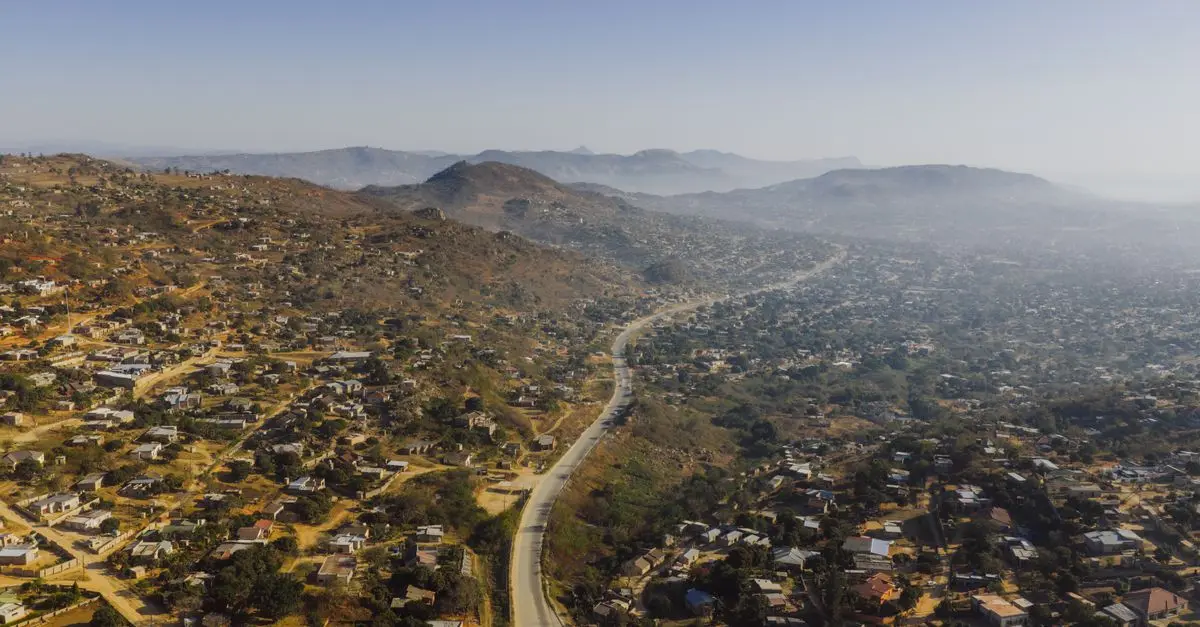
SZ country scene

Entry Permit Class B - Employed Dependant

EswatiniWork

Explore the five recorded questions, answers and sources for this pathway.

Official link

What type of worker, employment situation, occupation or professional activity is this pathway actually designed for?

Class B is for a person who already holds a dependant's pass and is offered specific employment.

See recorded sources

Does the applicant need a job offer, employer, sponsor, transfer relationship or other employer involvement? What is important about that employer relationship?

Yes. The job offer must come from a specific employer. That employer is named in the permit and must report in writing to the Chief Immigration Officer within seven days if the holder ceases the employment; the Chief Immigration Officer may also require the employer of a Class A, B or C holder to file returns in Form 19.

See recorded sources

What are the few decisive professional characteristics of the pathway: occupation, qualifications, experience, salary, skill level, shortage status, labour-market condition or equivalent?

The engagement in the offered employment must be of benefit to Eswatini. The entry-permit application notes state that entry permits are issued to non-citizens with skills not currently available on the Eswatini labour market, on the understanding that effective training programmes produce trained citizens within a specified period.

See recorded sources
Limits of the record
  • No qualification, salary or occupation-list criterion is stated for Class B in the captured sources.
  • The labour-market note sits in the explanatory notes of the Form 3 application, not in the Class B Schedule text itself.

What work does the permission allow? Is the holder tied to an employer, occupation or sector? Can family accompany where clearly established?

Work is limited to the employment for which the permit was issued: ceasing it, or engaging in any other employment, occupation, trade, business or profession without written approval of an immigration officer, invalidates the permit. A married woman living with her husband who holds a dependant's pass and a Class B permit keeps that dependant's pass valid for its unexpired period whether she engages in or ceases the Class B employment.

See recorded sources
Limits of the record
  • The sources do not state whether the Class B holder's own family members may accompany or work.
  • https://www.gov.sz/images/home-affairs/immigration%20act%2C%201982.pdf
    (1) Where an entry permit, other than an entry permit of class I or J has been issued to a person, and that person, without having obtained the written approval of an immigration officer — (a) has failed to engage, within fourteen days of the date of issue of the entry permit or such other period as may be specified on the permit, or of that per- son’s entry into Swaziland, whichever is the later, in the employment, occu- pation, trade, business or profession in respect of which that entry permit was issued; or
  • https://www.gov.sz/images/home-affairs/immigration%20act%2C%201982.pdf
    (b) has ceased to engage in the said employment, occupation, trade, business or profession; or (c) has engaged in any employment, occupation, trade, business or profession, whether or not for remuneration or profit, other than the said employment, occupation, trade, business or profession, that entry permit shall thereupon cease to be valid
  • https://www.gov.sz/images/home-affairs/immigration%20regulations.pdf
    Provided that nothing in this regulation shall render invalid a dependant’s pass issued in respect of a married woman who is living with her husband and who has been issued with an entry permit of class B and such dependant’s pass shall, subject to the provisions of the Act, be of full force and effect for the unexpired period of its validity notwithstanding that such married woman engages in any employment under the entry permit or has ceased to engage in such employment.
How long is the permission normally granted for, how is it renewed, and what longer-term residence direction exists if officially stated?

The period of validity of an entry permit is at the discretion of the Chief Immigration Officer; it may be renewed for further periods on payment of the renewal fee, but may not be issued or renewed for a period exceeding five years from the date of issue. As a longer-term direction, the Act's Class J entry permit covers a person resident in Eswatini for a continuous period of ten years who has khonta'd under Swazi law and custom and has applied for, and not been refused, full Swazi citizenship.

See recorded sources
Limits of the record
  • The length actually granted is discretionary; the source gives no typical period.
  • The Act does not state that time held on this permit class counts towards the Class J ten-year residence, nor that Class J is an automatic progression.
  • https://www.gov.sz/images/home-affairs/immigration%20regulations.pdf
    The period of validity of any entry permit shall be at the discretion of the Chief Immi- gration Officer but may be renewed for further periods on the payment of the renewal fee specified in the Second Schedule hereto: Provided that an entry permit shall not be issued or renewed for a period exceeding five years from the date of issue.
  • https://www.gov.sz/images/home-affairs/immigration%20act%2C%201982.pdf
    (b) has been a resident of Swaziland for a continuous period of ten years; and — (i) has Khontaed according to Swazi Laws and Custom; and (ii) proves, to the satisfaction of the Chief Immigration Officer that he has applied for and has not been refused full Swazi Citizen status.

These are the answers currently recorded in the catalogue. A missing or partial answer is not an eligibility decision.

Your story.
Your next step.

Get your free results